Piston Pumps and Control Valves for Hydraulic Systems
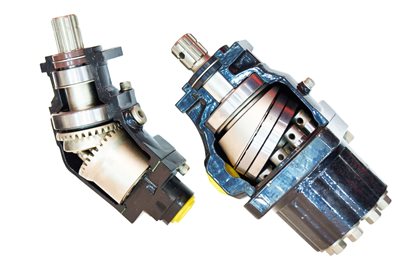
Hydraulic systems are at the heart of many industrial, agricultural, and construction applications. These systems rely heavily on two essential components to function efficiently: piston pumps and control valves. Understanding how these components work and complement each other is key to maintaining a robust and efficient hydraulic system.
Piston Pumps
Piston pumps are a crucial type of hydraulic pump used in high-pressure applications. Known for their efficiency and durability, they are designed to move hydraulic fluid through the system to generate the power necessary for mechanical movement.
What Is a Hydraulic Piston Pump?
A hydraulic piston pump is a positive displacement pump that uses the reciprocating motion of pistons to move fluid. These pumps can produce high pressure and are used in systems requiring consistent and powerful fluid flow. In any piston pump hydraulic system, reliability and durability are vital qualities that make piston pumps indispensable in heavy-duty applications.
How Do Hydraulic Piston Pumps Work?
Hydraulic piston pumps operate by using a cylinder and piston mechanism. As the piston pulls out of the cylinder it creates a vacuum that draws fluid into the cylinder. When the piston back into the cylinder it pushes the fluid out through the outlet port at high pressure. This cyclical motion ensures a steady flow of hydraulic fluid to the system.
Main Types of Piston Pumps
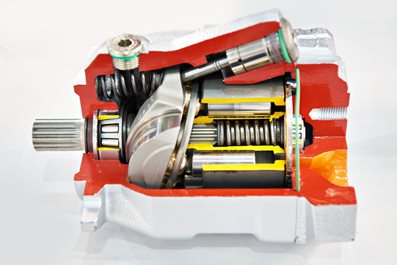
Hydraulic piston pump types include:
- Axial Piston Pumps: These pumps have pistons arranged, parallel to the shaft, in a circular pattern within a cylinder block. They're widely used for their efficiency and compact design. Variable and fixed displacements are available.
- Radial Piston Pumps: Pistons are arranged radially around a central drive shaft. These are suitable for very high-pressure applications. Most commonly fixed displacement in design but variable displacement options are available.
- Bent Axis Piston Pumps: These pumps have an angled design between the cylinder block and drive shaft, which improves mechanical efficiency and makes for a more compact design. . Most commonly fixed displacement in design but variable displacement options are available
- Swash Plate Pumps: A type of variable displacement axial piston pump that uses a swash plate to adjust the pump displacement. These are common in mobile and industrial hydraulic systems.
Applications of Piston Pumps
Some of the common applications of piston pumps across a variety of demanding industries include:
- Construction machinery (excavators, bulldozers)
- Agricultural equipment (tractors, harvesters)
- Industrial machinery (presses, lifts)
- Marine and aerospace systems
- Oil and gas operations
Control Valves
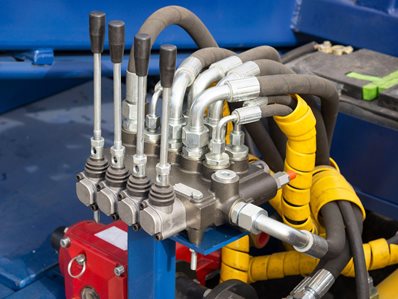
Control valves are essential components in hydraulic systems that regulate the flow and pressure of hydraulic fluid. They ensure that the right amount of fluid reaches the right place at the right time, enhancing system performance and safety.
What Is a Hydraulic Control Valve?
A hydraulic control valve is a device that manages the direction, flow rate, and pressure of hydraulic fluid within a system. It controls where the fluid goes and how much of it moves, helping operate different parts of machinery efficiently. When integrated correctly, pump control valves can significantly enhance system responsiveness.
How Do Hydraulic Control Valves Work?
Control valves function by opening, closing, or partially obstructing passageways within the hydraulic circuit. Operators can manually or electronically adjust these valves to change the direction or amount of flow, or to maintain pressure at a desired level by selecting the appropriate hydraulic pump control settings.
Main Types of Control Valves
- Directional Control Valves: These control the path of fluid flow in a hydraulic system, determining which actuator the fluid reaches.
- Pressure Control Valves: They maintain system pressure within a desired range, preventing damage from overpressure.
- Flow Control Valves: Hydraulic flow control valves regulate the flow rate to various parts of the system, ensuring consistent actuator speeds.
- Proportional Control Valves: Provide precise control over flow and pressure, often used in complex or automated systems.
- Servo Valves: High-performance valves that offer very accurate control, ideal for closed-loop systems and sensitive machinery.
Applications of Hydraulic Control Valves
Control valves are used wherever fluid direction, pressure, or flow needs to be managed, including:
- Industrial automation
- Mobile hydraulics
- Agricultural machinery
- Aerospace hydraulics
- Marine equipment
- Material handling systems
Piston Pumps vs. Control Valves
Both piston pumps and control valves are essential in hydraulic systems, but they serve very different purposes.
Piston pumps generate power by converting mechanical energy into hydraulic energy through high-pressure fluid movement. In contrast, control valves regulate and direct this power to ensure it is used effectively and safely across the system. Without control valves, the energy created by the pump would be unmanageable.
Different Operation Methods
Hydraulic pumps and valves can be operated using various methods:
- Mechanical: Levers and cams control valve or pump action.
- Manual: Hand-operated levers or wheels allow human control.
- Electronic: Sensors and electronic controls offer automation, feedback, and precision.
The choice of operation method depends on the complexity, required precision, and the nature of the application.
Which Control Valves Are Used With Which Pumps?
Control valves and pumps can be paired with virtually any type of hydraulic pump, including piston pumps. Some common pairings include:
- Axial piston pumps + directional control valves: A standard setup in construction equipment to control the movement of hydraulic arms.
- Variable displacement pumps + directional control valves: Ideal for industrial automation, where precise control over speed and force is essential.
- Radial piston pumps + proportional valves: Frequently used in heavy-duty equipment that operates under high pressure, such as presses or injection molding machines.
These flexible pairings ensure that the hydraulic system delivers both power and control in an efficient and coordinated manner while allowing for custom configuration of hydraulic pump control solutions.
Get the Hydraulic Power You Need From White House Products Ltd.
White House Products Ltd. is proud to offer a wide range of hydraulic piston pumps and control valves to meet the demands of your applications. Whether upgrading your system or building a new one from scratch, we have standard and custom-built options to suit your exact requirements.
We are your trusted partner for all your hydraulic system parts and components, from high-performance pumps to precision-engineered valves. Explore our online catalogue or contact us directly today.
Back to blog posts
